
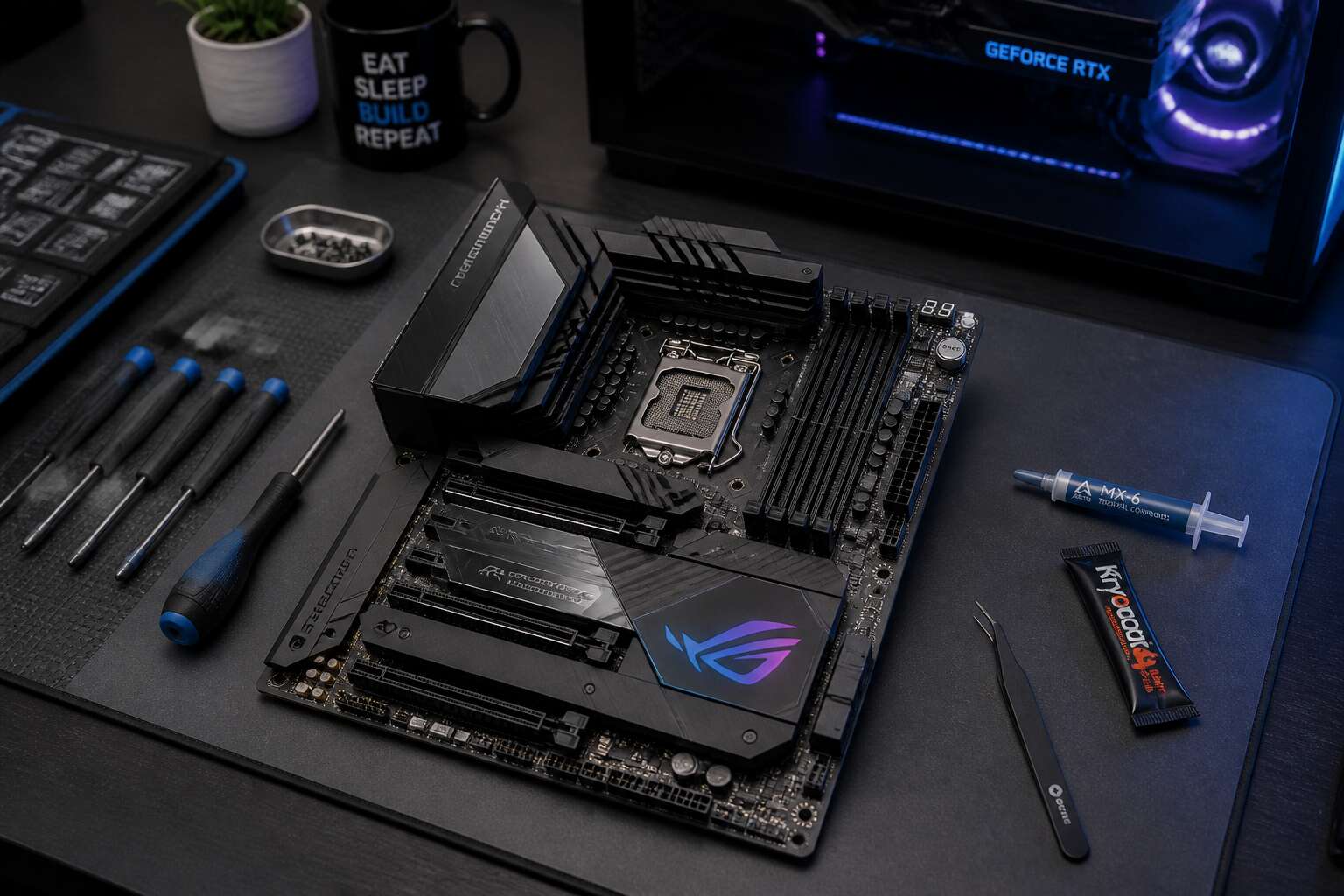
The Evolution of Motherboard Manufacturing
The first time I pried open a desktop tower in the late nineties, the motherboard was a sprawling, beige expanse of arcane circuitry. It smelled of solder and potential. Back then, the layout told the story of the components; you could see exactly where the CPU socket ended and the memory banks began. Today, that story is a tightly wound palimpsest of engineering, a dense cityscape of capacitors and heatsinks that demands a second glance to decipher.
The manufacturing process has shifted from a simple act of assembly to a calculated dance of precision. Modern factories utilise automated optical inspection to scrutinise every trace for the slightest flaw, a far cry from the manual visual checks of yesteryear. This evolution drives the entire market, forcing the primary motherboard brands to compete on build quality and power delivery sophistication. The PCB layers are now a crucial battleground, with premium models featuring thicker copper for stability at extreme clock speeds.
– The move to lead-free solder, mandated by environmental directives, requiring higher reflow temperatures.
– The integration of chipset active cooling, soon abandoned for passive heatsinks, shaping the general landscape of the boards we know.
– The shift from parallel ATA ribbons to SATA and then to M.2 slots, each redefining the physical footprint of storage.
This silent transformation has birthed the robust, almost industrial aesthetics we see today. What once was a simple foundation is now a canvas for technological dominance, and the choice between the top motherboard brands is often a choice between different philosophies of durability and flair. As we barrel forward into an era of PCIe 5.0 and beyond, the architecture continues to evolve, a relentless march towards greater efficiency and raw speed.
Leading Premium Motherboard Manufacturers
Premium motherboard brands command a quiet reverence among builders. They are not components. They are foundations. The market offers many options, yet a handful of names rise above the noise. ASUS ROG, MSI MEG, and Gigabyte Aorus define the upper echelon. Each year, these companies push silicon limits with exotic power delivery and refined aesthetics.
Consider what separates them!
- ASUS ROG leads with BIOS stability and aggressive VRM design.
- MSI MEG appeals to enthusiasts seeking unique features.
- Gigabyte Aorus balances coverage with cost.
These motherboard brands rarely compromise on quality. Their engineering speaks through every dense layer of PCB trace and heatpipe. For South African builders, we see this choice as an investment in longevity. The allure is real! So is the price. Both become part of a machine you will not soon forget.
Reliable Mid-Range and Budget-Friendly Brands
For most builders, the motherboard determines stability and upgrade paths. Pair a powerful processor with a flimsy board, and the whole system suffers. In South Africa, the market for reliable mid-range and budget-friendly motherboard brands stays fiercely competitive. ASRock, Gigabyte, and MSI deliver options that do not break the bank, and I have used all three in local builds.
These are the names you will notice on store shelves, and for good reason. They offer enough PCIe slots, VRM quality, and BIOS support for daily work or gaming. Some models even include extras like Wi-Fi and RGB headers without inflating the price.
- ASRock B660M series
- Gigabyte B450 boards
- MSI Pro H610M
Each of these motherboard brands brings a specific strength. ASRock focuses on raw value, while Gigabyte balances features and thermals well. MSI often provides better software. The real trick is matching the board to your processor and needs, not just chasing a logo.
Specialty and Enthusiast-Focused Brands
Enthusiast builders in South Africa often chase a specific kind of perfection. The specialist motherboard brands like ASRock and Biostar push boundaries. They cater to overclockers and modders, yet that focus demands sacrifice. These brands strip away flashy RGB. They prioritize power delivery and thermal headroom. You might see premium capacitors or extra PCIe lanes. Their target audience values raw performance. I find this honesty refreshing. It speaks to a deep urge to master hardware. Here is what separates them from mainstream options:
- Enhanced VRM designs for stability
- Custom BIOS tuning options
- Dedicated debug tools
This approach means fewer consumer conveniences. Yet for the right user, these motherboard brands offer a direct path to control. The tradeoff feels worth it.
How to Evaluate Motherboard Brands for Your Build
Selecting motherboard brands requires patience. South Africa’s power grid causes fluctuations that stress weak components, and I have watched expensive boards fail while cheaper ones survived. That is why you must evaluate beyond the logo.
Check three criteria:
- VRM quality, which governs clean power delivery.
- BIOS update frequency, a sign of long term care.
- Warranty support in your region.
These factors determine reliability more than marketing. Reliable brands earn trust through consistent behaviour. Do not chase the cheapest price! Your build deserves a stable base.
0 Comments