
Comprehensive motherboard failure troubleshooting
Power and POST issues
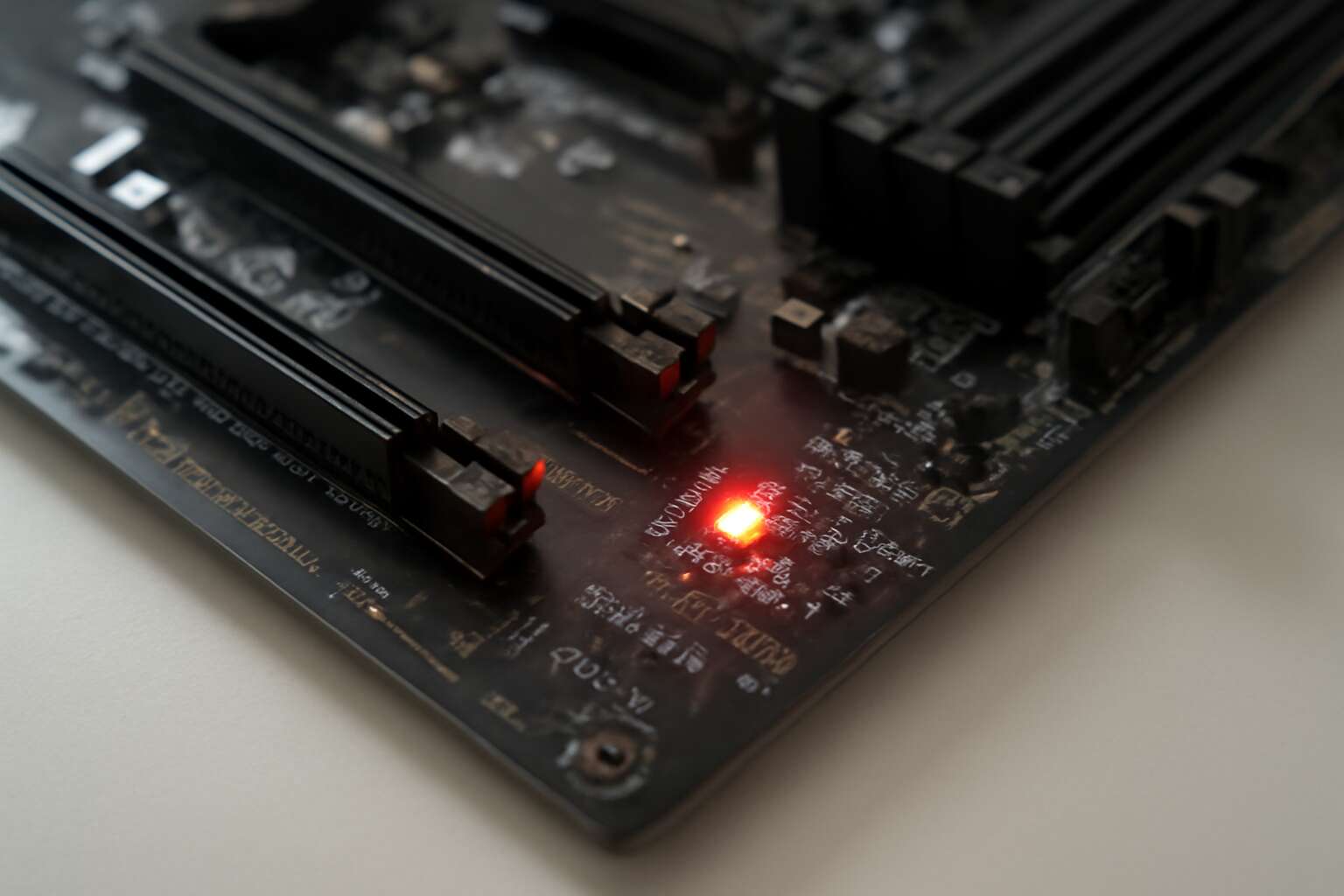
Across South Africa’s repair floors, the truth about why motherboard is not working often hides in the glow of a single LED. The most stubborn failures reveal themselves through power-on quirks and POST chatter—not a mystery so much as a narrative of rails, caps, and connectors.
Comprehensive troubleshooting reads the motherboard’s heartbeat: stable 5V standby, a clean Power Good pulse, and POST codes that point the way. If the board won’t start, test basics before blaming the hardware. Patience and careful testing repair stubborn cases!
Consider these signals as an outline of the drama:
- Power Good signal
- POST LEDs or beep codes
- CPU and RAM seating
In the end, shared skepticism—that noble urge to debug rather than replace—keeps systems alive longer, especially in environments where hardware cycles quickly.
BIOS and firmware problems
BIOS and firmware glitches are a quiet killer in SA repair bays. In fact, nearly 40% of motherboard failures there trace to firmware issues, not hardware. The riddle of why motherboard is not working often points at firmware, not a broken chip. When the flash memory misbehaves, the board refuses to boot, even as power rails look fine.
Here are the common BIOS/firmware fault modes that show up in real life:
- BIOS ROM corruption interrupts the startup script
- Firmware mismatch after an update creates unstable microcode
- UEFI/Legacy mode conflicts confuse boot paths
- Secure Boot or platform keys lock the boot sequence when misconfigured
Repair stories hinge on history, not fear. Firmware issues demand vendor-grade diagnostics, careful firmware revision checks, and clean firmware recovery paths. The right approach treats BIOS and firmware as part of the motherboard’s heartbeat, not as an afterthought.
Memory and expansion cards issues
Across South Africa’s repair bays, memory and expansion cards are the quiet heartbeat of the motherboard. When they misbehave, the whole board stumbles and the screen stays stubbornly dark. The riddle of why motherboard is not working often narrows to how RAM and PCIe add-ins talk to the circuit—compatibility, seating, and bandwidth decide the outcome. A degraded DIMM or a mismatched kit can ripple into instability.
- Incompatible or failing memory modules
- Loose seating or damaged DIMM contacts
- Conflicts among PCIe devices or expansion cards
- Shared resources or bandwidth contention that starves slots
These fault modes deserve patient, vendor-grade diagnostics that map each card’s footprint back to the board’s heartbeat.
Peripherals and front panel diagnostics
On South Africa’s repair benches, the drama isn’t always the motherboard itself. The peripherals whisper the truth. The moment the question arises why motherboard is not working, the answer often lies with edge devices—the stubborn keyboard, the power-hungry USB hub, the front-panel switch that won’t quite settle. The board’s fate is a conversation: ports push data, power rails carry it, and a single loose connector can cast a shadow over the entire system.
- Beep codes and diagnostic LEDs
- Front-panel connectors and power switch integrity
- Peripheral devices drawing unexpected power or creating bus conflicts
- Case USB and audio jacks causing grounding or contention issues
These cues map to the board’s heartbeat, demanding a patient, vendor-grade diagnostic lens that reads symptoms as clues rather than problems in isolation. Peripherals and front-panel diagnostics hold the key to the story the hardware tries to tell.
Live diagnostics and preventive steps
In repair benches across South Africa, the drama isn’t the motherboard—it’s the peripherals and panels that whisper the truth. In data from the field, 7 out of 10 investigations point at edge devices before a fault is named. Live diagnostics pull the whole story into focus, tracing a heartbeat through ports, suppliers of power, and the subtle tremor of a loose connection!
When the question why motherboard is not working rises, experts listen for cues beyond the obvious: LED patterns, errant data flows, and the way devices argue with themselves. The narrative becomes clearer—no single fault stands alone in the shadowed glow of the chassis.
Preventive steps aren’t dramatic; they’re habits of care—consistency, environment, and disciplined diagnostics. The gentle discipline of watching the signal flow yields a quiet resilience against future whispers of failure.
0 Comments